2020年3月24日星期二

LSG-5000 Goniophotometer is Designed According to EN 13032-16.1.1.3 Goniophotometer type 3

The full name of EN13032-1 is Light and lighting Measurement and Presentation of photometric data of lamps and luminaires. It is edited by CEN in 2004. This standard is a guide to procedures referring where necessary to the relevant CIE, ISO and CEN publications . We will introduce the clause 6.1.1.3 Goniophotometer type 3 in this article.

The following is the original content of EN 13032-1 6.1.1.3 Goniophotometer type 3.

6.1.1.3 Goniophotometer type 3

The light source is rotated around a vertical axis, a mirror arrangement around a horizontal axis. The photometer head is fixed.

The mirror shall not limit the view of the light source from the photometer head and to be plane. They should have a spectrally constant reflectance or their spectral reflectance shall be considered for the V(λ) correction of the used photometer head. Attention shall be paid to the polarization of the radiation due to reflection by the mirrors and the local situation of the reflection.

The goniophotometer of type 3 can be distinguished as follows:

1) Type 3.1:
a ) centre of mirror in rotation center;
b ) light source is rotated around the mirror on a fixed radius.

2) Type 3.2:
a ) light source in rotation center;
b ) the mirror is rotated around the light source on a fixed radius.

3) Type 3.3:
Light source and mirror are led on two oppositely orientated fixed radius around the rotation center.

LISUN designed the LSG-5000 Moving detector goniophotometer according to the EN 13032-1 Clause 6.1.1.3 standard. The measuring distance is from 5m to 30m. It can measure all types lighting sources, LED or HID luminaries such as indoor and outdoor luminaries. Roadway luminaries, street lamps, flood lights and other kinds of luminaries. And we also designed different kinds of dimension goniophotometer according to different sizes of tested samples. We will update the software and testing parameters according to the updating of the EN 13032-1 standard.

The following is the picture of LSG-5000 Goniophotometer:


LSG-5000CCD Moving Detector Goniospectroradiometer

The following is the video of LSG-5000 Goniophotometer:


Lisun Instruments Limited was found by LISUN GROUP in 2003. LISUN quality system has been strictly certified by ISO9001:2015. As a CIE Membership, LISUN products are designed based on CIE, IEC and other international or national standards. All products passed CE certificate and authenticated by the third party lab.

Our main products are Goniophotometer, Spectroradiometer, Integrating Sphere, LED Test Instruments, CFL Test Instruments, Photometer and Colorimeter, EMC & EMI Testing, Surge Generator, Electrical Safety Testing, Environmental Test Chamber, IP Waterproof Test Equipment, Dustproof Test Chamber, High and Low temperature Humidity Chamber, Plug and Switch Testing, AC and DC Power Supply.


Please feel free to contact us if you need any support.

Tech Dep: Service@Lisungroup.com, Cell/WhatsApp: +8615317907381
Sales Dep: Sales@Lisungroup.com, Cell/WhatsApp: +8618917996096

GDJS/GDJW High and Low Temperature Humidity Chamber is Designed According to IEC 60068-2-1 Environmental Testing Part 2-1: Tests-Test A: Cold

The full name of IEC 60068-2-1 is Environmental Testing Part 2-1: Tests-Test A: Cold. It is edited by the IEC technical committee in 2008.We will introduce the IEC 60068-2-1 Environmental Testing Part 2-1: Tests-Test A: Cold

The following is the original content of IEC 60068-2-1

IEC 60068-2-1 Environmental Testing Part 2-1: Tests-Test A: Cold

This part of IEC 60068 deal with cold tests applicalbe to both non heat-dissipating and heat-dissipating specimens. For non heat-dissipating specimens, Tests Ab do not deviate essentially from earlier issues. Test Ae has been added primarily for testing equipment that requires being operational throughout the test, including the conditioning periods.

The object of the cold test is limited to the determination of the ability of components, equioment or other articles to be used, transported or stored at low temperature.

Cold tests cover by this standard do not enable the ability of specimens to withstand or operate during the temperature variations to be assessed. In this case, it would be necessary to use IEC 60068-2-14.

The cold tests are subdivided as follows:

- Cold tests for non heat-dissipating specimens

. with gradual change of temperature, Ab;

- Cold test for heat-dissipating specimens

. with gradual change of temperature, Ad,

. with gradual change of temperature, specimen powered throughout, Ae.

The procedures given is this standard are normally intended for specimens that achieve temperature stability during the performance of the test procedure.

LISUN designed the GDJS/GDJW High and Low Temperature Humidity Chamber according to the IEC 60068-2-1 standard. It is used to test the CFL/LED which meets IES LM-80-08, electricity products, electronic components, material and so on. We will update the procedure and testing parameters according to the updating of the IEC 60068 standard.
    
The following is the picture GDJS/GDJW High and Low Temperature Humidity Chamber

    
The following is the video of GDJS/GDJW High and Low Temperature Humidity Chamber


Lisun Instruments Limited was found by LISUN GROUP in 2003. LISUN quality system has been strictly certified by ISO9001:2015. As a CIE Membership, LISUN products are designed based on CIE, IEC and other international or national standards. All products passed CE certificate and authenticated by the third party lab.

Our main products are Goniophotometer, Spectroradiometer, Integrating Sphere, LED Test Instruments, CFL Test Instruments, Photometer and Colorimeter, EMC & EMI Testing, Surge Generator, Electrical Safety Testing, Environmental Test Chamber, IP Waterproof Test Equipment, Dustproof Test Chamber, High and Low temperature Humidity Chamber, Plug and Switch Testing, AC and DC Power Supply.


Please feel free to contact us if you need any support.
Tech Dep: Service@Lisungroup.com, Cell/WhatsApp: +8615317907381
Sales Dep: Sales@Lisungroup.com, Cell/WhatsApp: +8618917996096

2020年3月23日星期一

IK01-10 IK Level Tester is Designed According to IEC 60068-2-75

The full name of IEC 60068-2-75 is Environmental testing-Part 2-75: Tests- Test Eh: Hammer tests. It has been prepared by IEC technical committee 104:Environmental conditions, classification and methods of test. We will introduce the IEC 60068-2-75-1 Scope

The following is the original content of IEC 60068-2-75-1.

IEC 60068-2-75-1 Scope

This part of IEC 60068 provides three standardized and coordinated test methods for determining the ability of a specimen to withstand specified severities of impact. It is used, in particular, to demonstrate an acceptable level of electrotechnical items. It consists of the application to the specimen of a prescribed number of impacts defined by their impact energy and applied in the prescribed directions.

This part of IEC 60068 covers energy levels ranging from 0.14J (joules) to 50J(joules).

Three types of test apparatus are applicable to perform these tests. Annex C provides some guidance to this aspect.

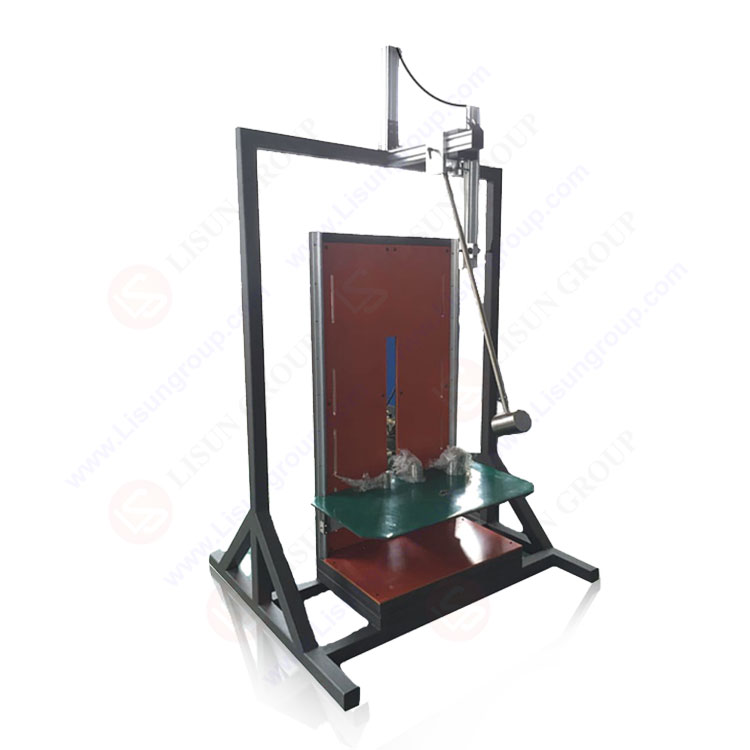
LISUN designed the IK01-10 IK Level Tester according to the IEC 60068-2-75 standard. Because most of luminaires manufacturers are requested to do IK level test. The different IK ratings relate to the ability of an enclosure to resist impact energy levels measured in joules(J).  IEC 62262 specifies the quantity and distribution of the test impacts and the impact hammer to be used for each level of IK rating. We can also design other kinds of level tester according to the customers’ requires.

The following is the picture of IK01-10 IK Level Tester


The following is the video of IK01-10 IK Level Tester


Lisun Instruments Limited was found by LISUN GROUP in 2003. LISUN quality system has been strictly certified by ISO9001:2015. As a CIE Membership, LISUN products are designed based on CIE, IEC and other international or national standards. All products passed CE certificate and authenticated by the third party lab.

Our main products are Goniophotometer, Spectroradiometer, Integrating Sphere, LED Test Instruments, CFL Test Instruments, Photometer and Colorimeter, EMC & EMI Testing, Surge Generator, Electrical Safety Testing, Environmental Test Chamber, IP Waterproof Test Equipment, Dustproof Test Chamber, High and Low temperature Humidity Chamber, Plug and Switch Testing, AC and DC Power Supply.


Please feel free to contact us if you need any support.

Tech Dep: Service@Lisungroup.com, Cell/WhatsApp: +8615317907381
Sales Dep: Sales@Lisungroup.com, Cell/WhatsApp: +8618917996096

How to test LED fixture for startup, rise time and flicker

In recent years, the LED market has been expanding, which is attributed to the unique characteristics of LED solid-state lighting products, such as good luminous efficiency, long service life and high reliability .Therefore, LED solid-state lighting products are increasingly favored by the market and consumers. But at the same time, because of the fast response speed of LED and the lack of thermal inertia and afterglow effect of traditional lamps, the LED is deeply affected by the current fluctuation, which directly affects the output of light flux.

The flicker of light source is the external reflection of the change of light flux. Therefore, the flicker of LED lighting products has attracted people's attention. In this regard, on December 14, 2012, the European Union (EU) officially issued regulation NO. 1194/2012 in its official gazette, "implementation details of directive NO. 2009/125/EC of the European parliament and the European council on ecological design requirements for directional lights, LED lights and related equipment". According to the European commission (EC) regulation NO244/2009 issued on March 18, 2009,the European parliament and the European council directive 2005/32/EC on the implementation of ecological design requirements for nondirectional household lamps, so far the eu has formed a complete mandatory ecological design requirements for LED lamps. Start-up time and rise time, as two indexes of functional requirements, are paid more and more attention by manufacturers in the industry.

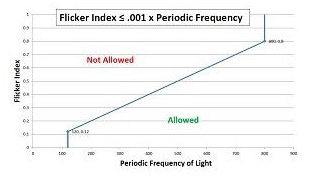
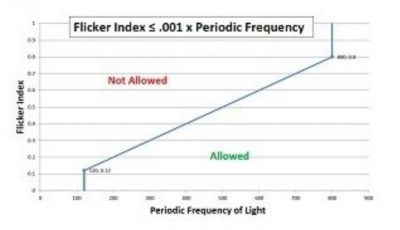
We just talked about the flicker effect of LED lighting, but most of people don't know what it means. The essence of light source flicker is the fluctuation of light flux. Driven by ac or pulse dc, the light flux, illuminance or brightness of the light source change correspondingly with the periodic change of current amplitude. Human eyes and human brains react subjectively to this change. Usually, Flicker can be divided into Visible Flicker and Invisible Flicker according to people's feelings. When the frequency is more than 100Hz, the human eye cannot feel the flicker phenomenon, but it will still cause eye fatigue, headache, etc. This is the yan shan effect, which is generally believed to exist within 500Hz. For this purpose, ENERGY STAR lamps V1.0 draft 4 specifies the conditions for flickering used for all lamps and lanterns in the dimming performance requirements.

 As shown in the figure below:
How to test led fixture for startup, rise time and flicker

The allowed range of light source flicker is:

1. The frequency is not less than 120Hz;
2. F1<0.001 X frequency within the frequency range of 120hz-800hz
3. There is no requirement for F1 when the frequency is greater than 800Hz;
4. If the frequency is uncertain, PF<30%;

In addition, the output frequency of compact fluorescent light should be 20-30khz, or greater than 40KHz.

The essence of light source flicker is the instability of light flux. When detecting the fluctuation of light source with time, the change curve of brightness can be tested, and the change curve of light flux or illumination can be tested under the same conditions. ENERGY STAR (V1.0) specifies the measurement requirements of flicker:

1. Power supply and measuring instruments shall meet LM-79-08 requirements;
2. Multi-channel oscilloscope with storage function, and attenuation probe can be added when necessary. The sampling rate is greater than 2kHz and the sampling time is greater than 100ms.
3. Photometric probe, V(in)correction, and the corresponding time should meet the requirements;
4. For absolute photometry :to measure the absolute value ,a sphere of integration Is required; For relative photometry: ensure that the detector is able to measure relative light output and only receives light from the light to be measured.
5. Before measurement, the compact fluorescent lamp shall be aged for 100 hours, and it shall be preheated before measurement. LED lights do not need to be old, the ambient temperature is 25+/-5 degrees.

In order to meet the EU Erp energy efficiency index requirements, as well as IEC60969S self-ballasts for general lighting safety requirements and energy star requirements, LISUN developed LSRF-3 lamps start, rise time and flicker test system, in order to meet the LED lamps start time, rise time instrument strobe flash test requirements.

Lisun Instruments Limited was found by LISUN GROUP in 2003. LISUN quality system has been strictly certified by ISO9001:2015. As a CIE Membership, LISUN products are designed based on CIE, IEC and other international or national standards. All products passed CE certificate and authenticated by the third party lab.

Our main products are Goniophotometer, Spectroradiometer, Integrating Sphere, LED Test Instruments, CFL Test Instruments, Photometer and Colorimeter, EMC & EMI Testing, Surge Generator, Electrical Safety Testing, Environmental Test Chamber, IP Waterproof Test Equipment, Dustproof Test Chamber, High and Low temperature Humidity Chamber, Plug and Switch Testing, AC and DC Power Supply.


Please feel free to contact us if you need any support.

Tech Dep: Service@Lisungroup.com, Cell/WhatsApp: +8615317907381
Sales Dep: Sales@Lisungroup.com, Cell/WhatsApp: +8618917996096

2020年3月19日星期四

Comparative Evaluation between ANSI / IES Standards LM-79-19 and LM-79-08

Spanish version LM-79-19 download: ANSI/IES LM-79-19 Mediciones Fotométricas y Eléctricas de Productos de Iluminación de Estado Sólido (SSL)
Ies Lm 79 19

This article tries to make a comparative evaluation between ANSI/IES LM-79-19 Standard that has replaced ANSI/IES LM-79-08 that deals with the methods approved by ANSI/IES regarding performance, requirements technicians of photometric and electrical parameters of solid state lighting products (SSL) from a perspective not necessarily specialized but with a user and academic vision regarding the technological devices involved.

In both cases it is also an approved method that describes the procedures that must be followed and the precautions that must be observed when making accurate reproducible measurements of the total, radiant or photonic luminous flux; electric power; system efficiency; distribution of light, radiant or photonic intensity and amounts of color and/or spectrum of solid state lighting (SSL) products for lighting purposes, under standard conditions.

It covers LED luminaires, OLED luminaires, integrated LED lamps, integrated OLED lamps, non-integrated LED lamps operated with a controller (driver) designated by the manufacturer's identification number or by a defined ANSI reference circuit, and LED light motors, all of which they will be called SSL products or Device Under Test (DUT). SSL products, excluding non-integrated LED lamps, are designed to connect directly to AC mains power or to a DC voltage power source for operation.

For millions of years, living beings on this planet have had the dialectical experience of light and dark with light, dark and gloom that established a lasting genetic and organic mark in our body that precisely regulates functions such as behavior, hormonal levels, sleep, body temperature and metabolism. In animated beings, the discovery of fire also generated important changes in their physiological, psychological and sociological development that transcends their behavior and survival. The invention of the electric light bulb, analogously to the formation of the sun for 4.5 billion years, has a decisive influence on the existential bases of the inhabitants of our planet.

On the other hand, the vertiginous technological development that occurs in these times in lighting technology that, among other things, provides for the widespread use of SSL products that could save approximately 348 TWh of electricity, a saving greater than US $ 30 billion already for the year 2027, they oblige to guarantee reliability in its use.

In that sense, the standards that guarantee this implementation must adapt quickly to this evolution. For this reason, the purposes of the American National Standard, which cover SSL or DUT products, generate new and better interpretations in the evaluation of the corresponding test results.

The ANSI/IES Standard LM-79-08 is approved as an IES Agreement in December 2007 and as the National Standard the following year. It constitutes one of the first methods of testing SSL products and became a standard test method for the global measurement of this new technology. In Europe, the CIE S 025 Standard was developed based on the experience of the LM-79 although it is broader and covers more measuring instruments in greater detail.

Document ANSI/IES LM-79-19 is a revision of document IES LM-79-2008. It makes changes to update the information and provides better guidance based on data collected from proficiency tests associated with laboratory accreditations and independent research. The updated requirements in this test method are intended to reduce the variation in measurement results between test laboratories, while minimizing the burden on those laboratories. The method is based on an absolute photometry that addresses the requirements for photometric and electrical measurement of SSL products.

Regarding its structure, the document has changed significantly to match the structure of the approved IES Test Procedure Committee document. Below, we present the additions made by Standard LM-79-19 in relation to LM-79-08:

1) Unlike the LM-79-08, it emphasizes the accuracy of the measurements of all photometric parameters to be evaluated, incorporates and groups integrated LED lamps, integrated OLED lamps, non-integrated LED lamps operated with a controller designated by the Manufacturer identification number or by a defined ANSI reference circuit and LED light engines, all of which will be called SSL products or device under test (DUT).

2) It does not cover SSL products that require external heat sinks, nor does it cover components of SSL products, such as LED packages or LED arrays.

3) Additionally, it incorporates the following standards as references:

-ANSI/IES RP-16-17: Nomenclature and Definitions for Lighting Engineering. New York: Illuminating Engineering Society; 2017. Free online viewing: www.ies.org/standards/ansi-ies-rp-16/
-IES LM-78-17: Method approved by IESA for the Measurement of the Total Luminous Flux of Lamps using an Integrating Sphere. New York: Illuminating Engineering Society; 2017
-IES LM-75-01/R12: IES Guide for Measurement of Goniometers, Types and Photometric Coordinate Systems. New York: Illuminating Engineering Society; 2012

4) Add the definitions of Acceptance Interval (Interval of permissible measured quantity values), peak current crest factor (ratio of the absolute value of the maximum AC current divided by the RMS AC current) and Tolerance Interval allowed permissible values ​​of a property.

5) Increase the tolerance range of ± 1.0 °C to ± 1.2 °C of the ambient temperature at which measurements are taken at 25 °C and the distance measured at a point of 1.0 m to no more than 1.5 m of the SSL product at the same height as the SSL product.

6) It adds in the goniometer air flow measurements that require movement of the device under test, a lower tolerance limit greater than 0.20 m/s in the instantaneous tangential velocity of any point in the DUT.

7) In Thermal Conditions for the assembly of SSL products add in support materials that have low thermal conductivity to polytetrafluoroethylene. It also points out that, although no specific requirements are established, in good laboratory practices they suggest that SSL products should not be subjected to excessive vibrations or shocks during stabilization, transport, assembly or testing. It also notes that, for goniometer measurements, scattered light must be suppressed in the test environment, through the appropriate use of low reflectance finishes on surfaces, shields and unfavorable areas

8) In addition the DC voltage regulation has been added in addition to the AC voltage regulation. Test circuit requirements are also added, to avoid the effects of voltage drops in cables or lampholders and requirements in the maximum resistance of the test circuit because a high resistance can alter the operation of SSL products. It is also noted that the capacitance of the test circuit, not including the power supply, must be less than 1.5 nanofarads (ɲF). Similarly, it is established that no reference circuit is necessary to test SSL products.

9) In relation to the Calibration of the electrical measuring instrument, it is established that all electrical measuring equipment must be calibrated and traceable to the International System of Units (SI) with values ​​for the internal impedance of the voltage circuit, for accuracy of the alternating current meter, for the frequency range of the alternating current analyzer, for total harmonic distortion measurements, DC voltage measurement and DC current measurement.

10) Regarding the Electrical Configurations, it is indicated that the DUT will operate at the nominal AC RMS voltage or nominal DC current according to the SSL product specification for normal use. In addition, parameters are established for a variety of existing configurations, especially in the field of influence of American standards.

11) In Preparation of Tests, it establishes guidelines for the identification and management of DUTs. It is warned that, while SSL products will be tested without adaptations, if they are intended to be a verification standard or a device for laboratory comparison, SSL products must work for at least 1,000 hours before being put into service. It is also established that measures will be taken prior to the operation and stabilization of the DUT so that it operates long enough to achieve photometric and electrical stabilization and temperature equilibrium. It also establishes guidelines for the operating position and orientation of DUTs and optical and electrical waveforms.

12) In Measurements of the total luminous flux and integrated optics, the concept of DUTs is also incorporated, avoiding the use of incandescent or fluorescent lamps. The use of the integrating sphere (4π or 2π) with types of detectors is repeated to make measurements: V (λ) corrected photometer head (sphere-photometer) and spectroradiometer (sphere-spectroradiometer) and expands with the use of photometers and spectroradiometers describing their characteristics with advantages and disadvantages in each case and development of self-absorption correction concepts to minimize uncertainty. In general, unlike the LM-79-08 Standard, the technical and mathematical concepts of the concepts are not developed and the practical and applicative aspect of the instruments and devices that integrate the corresponding measurement systems is emphasized.

13) In relation to Luminous Intensityor Angular Distribution Measurements, develops a simplified and practical way the procedures and characteristics of the devices and components such as photometers, spectroradiometers, test distances and alignment of the goniometer.

14) In the same way, in the section on Uniformity and Chromaticity Measurements it establishes that SSL products may have a chromaticity variation with the emission angle and indicates that a measurement method was provided in Standard LM-79-08 the integrated chromaticity and the spatial non-uniformity of the chromaticity when a goniospectroradiometer or a goniocolorimeter was not available; Thus, note that this method will not be used. It also defines the measurement characteristics for the angular resolution, the angular range, the angular uniformity of the color, the limits of the signals and the verifications.

15) Regarding Measurement of Uncertainty, understood as a quantitative measure of the quality of the measurement result, which allows the measurement results to be compared with other results, references, specifications or standards, it is stated that it is intended to limit the magnitude of the measurement uncertainty and that direct calculation of the measurement uncertainty is not required for an SSL product measurement given the tolerance intervals that have been provided throughout the Standard.

16) In Requirements reports, the concept of DUTs is incorporated and the pertinent data on the test conditions, the type of test equipment, the SSL products and the reference standards are simplified.

17) Some aspects that in the development of Standard LM-79-19 have not been treated in statistical or mathematical detail, they have been able to be presented in the Annexes in a more orderly and didactic way. So that, information is supported on the Airflow Considerations for testing SSL products (Annex A), High Frequency Current and Circuit Capacitance Measurement (Annex B), Power Supply Resistance and Dependence of inductance (Annex C), Tolerance Intervals versus Acceptance Intervals (Annex D), Benefits of waveform measurements (Annex E) and Lower light intensity for chromatic uniformity (Annex F).

In general, we could set that due to the unique thermal and electrical characteristics of SSL products, standard test methods that use relative photometry cannot adequately measure the output of the luminous flux from LED light sources. The LM-79 Standard solves this problem using absolute photometry. The revision of the same introduces the necessary changes due to the current technological development that, without substantially varying the basic concepts, facilitates the conditions of reliable evaluation of the measurement system and tests of photometric, optical and electrical devices involved.

In fact, an adequate application of the parameters referred to in Standard LM-79-19 to achieve reliable and accurate results as stipulated is the LISUN model goniophotometer with motion detector model LSG-5000SCCD Moving Detector Goniospectroradiometer that fully meets the requirements of goniophotometers type 4 indicated in this updated Standard (clause 9.3.1) and Standard EN 13032-1 (clause 6.1.1.3) because it is an automatic test system with 3D light intensity distribution curves for light measurement from a variety of sources. In this way, information on Luminous Intensity, Luminous Intensity Distribution, Zonal Luminous Flux, Luminaire Efficiency, Luminance Distribution, Utilization Coefficient, Luminance Glare Limitation Curves, Maximum Distance to Height Ratio, Isoiluminancia Diagrams can be obtained, Luminaire curves vs. Illuminated area, Isocandela diagrams, Efficient Luminescence Angle, EEI (Energy Efficiency Index), UGR (Unified Glare Index) among others.


LSG-5000CCD Moving Detector Goniospectroradiometer

Likewise, for evaluations of SSL Products that identify the behavior of a single LED or an LED luminaire through its photometric, colorimetric and electrical parameters strictly following the standards prescribed by the updated LM-79 Standard, systems of integrating spheres with radioradiometer spectrum high precision like the LISUN LPCE-2 High Precision Spectroradiomet Integrating Sphere System model that is applied with a CCD spectroradiometer and worked with an integrating sphere model with a cyclic test base with more accurate results. In this way, colorimetric measurements can be made (chromaticity coordinates, CCT correlated color temperature consistency, color ratio, peak wavelength, average broadband, dominant wavelength, color purity, CRI color reproduction index , CQS, TM-30, Spectrum test), photometric (luminous flux, luminous efficiency, radiant power, EEI energy efficiency index, energy efficiency class, pupillary flow, pupillary flow efficiency, pupillary factor, cirtopic flow), electrical (voltage, current, power, power factor - options: VF, IF, VR, IR) as well as optical maintenance tests with SSL products in accordance with the LM-80 standard (luminous flux versus time, CCT versus time, CRI versus time , power versus time, power factor versus time, electric current versus time and flow efficiency versus time).

Although Standard LM-79 specifies the parameters of individual products and the test data obtained cannot be used to evaluate similar products and perform lighting calculations. LM-79and this new approved version does not specify any sampling size. If the quantity of samples that can be subjected to a test is not specified, this could generate some vulnerability of the lower quality products.
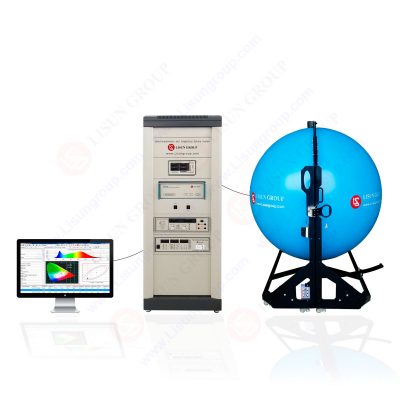

LPCE-2(LMS 9000) Spectrophotometer & Integrating Sphere Test System

References:
  • ANSI/IES LM-79-08 y LM-79-08, Método aprobado: Mediciones Fotométricas y Eléctricas de Productos de Iluminación de Estado Sólido (SSL)
  • UNE-EN 13032-4 Norma Española: Luz y Alumbrado, Medición y Presentación de Datos Fotométricos de Lámparas y Luminarias. Parte 4: Lámparas LED, módulos y luminarias. Octubre 2016.
  • Cie 17.4, 1987 International Lighting Vocabulary.
  • Protzman / k. Houser. LEDs for General Illumination: State of the Science. LEUKOS, 121-142, 2006.
  • Moon. Scientific Basis of Illumination Engineering. Electrical Engineering Texts, 1966.
  • Gershum. The Light Field, 51-151, 1936.
  • LISUN - Solutions for testing LED luminaires and electronic drivers. Electric current versus time and flow efficiency versus time).
  • LISUN - Test system with integrating sphere & spectrophotometer: LPCE-2
Lisun Instruments Limited was found by LISUN GROUP in 2003. LISUN quality system has been strictly certified by ISO9001:2015. As a CIE Membership, LISUN products are designed based on CIE, IEC and other international or national standards. All products passed CE certificate and authenticated by the third party lab.

Our main products are Goniophotometer, Spectroradiometer, Integrating Sphere, LED Test Instruments, CFL Test Instruments, Photometer and Colorimeter, EMC & EMI Testing, Surge Generator, Electrical Safety Testing, Environmental Test Chamber, IP Waterproof Test Equipment, Dustproof Test Chamber, High and Low temperature Humidity Chamber, Plug and Switch Testing, AC and DC Power Supply.


Please feel free to contact us if you need any support.

Tech Dep: Service@Lisungroup.com, Cell/WhatsApp: +8615317907381
Sales Dep: Sales@Lisungroup.com, Cell/WhatsApp: +8618917996096

Characteristics of LISUN GDJS series High and Low Temperature Humidity Chamber

LISUN GDJS series High and Low Temperature Humidity Chamber is according to IEC60068-2-1 (GB/T2423.1) and IEC60068-2-2 (GB/T2423.2). It is used to test the CFL/LED which meets IES LM-80-08, electricity products, electronic components, material and so on.

There is some other manufacturers in China also produce High and Low Temperature Humidity Chamber, and our equipment is mainly different from the following four points:

(1) Display temperature: We use Schneider or Omron’s relay. And the temperature that can be reached is the temperature under load. But many manufacturers refers to the temperature without load. If under load, the temperature must be different from the original temperature.

(2) Water purification device: To generate humidity inside the equipment, there must be distilled water. And there is a water purification device in our High and Low Temperature Humidity Chamber, so we can use tap water directly, to save the cost of distilled water. But many other manufacturers do not have water purification device in the machine.

(3) Temperature sensor: We use electronic temperature sensor, which can use for long time; while other domestic manufacturers use wire ball which is very easy to be bad to save costs.

(4) After-sales service: LISUN has engineers who visit our customers to do after-sales service all over the world, and all of our engineers can speak English well, so the after sales service is easy for us.

All of LISUN products are fully meet the international lighting standards, not just the GB. The quality of the equipment would be relatively high.

Lisun Instruments Limited was found by LISUN GROUP in 2003. LISUN quality system has been strictly certified by ISO9001:2015. As a CIE Membership, LISUN products are designed based on CIE, IEC and other international or national standards. All products passed CE certificate and authenticated by the third party lab.

Our main products are Goniophotometer, Spectroradiometer, Integrating Sphere, LED Test Instruments, CFL Test Instruments, Photometer and Colorimeter, EMC & EMI Testing, Surge Generator, Electrical Safety Testing, Environmental Test Chamber, Waterproof Test , Dustproof Test Chamber, High and Low temperature Humidity Chamber, Plug and Switch Testing, AC and DC Power Supply.


Please feel free to contact us if you need any support.

Tech Dep: Service@Lisungroup.com, Cell/WhatsApp: +8615317907381
Sales Dep: Sales@Lisungroup.com, Cell/WhatsApp: +8618917996096

2020年3月18日星期三

How To Build The Darkroom For Goniophotometer?

Goniophotometer is mainly used for light intensity performance measurement of luminaries and light source, which is the photometry value in different directions in space and color distribution. Goniophotometer should run in dark room, and what are the requirements for the test environment?

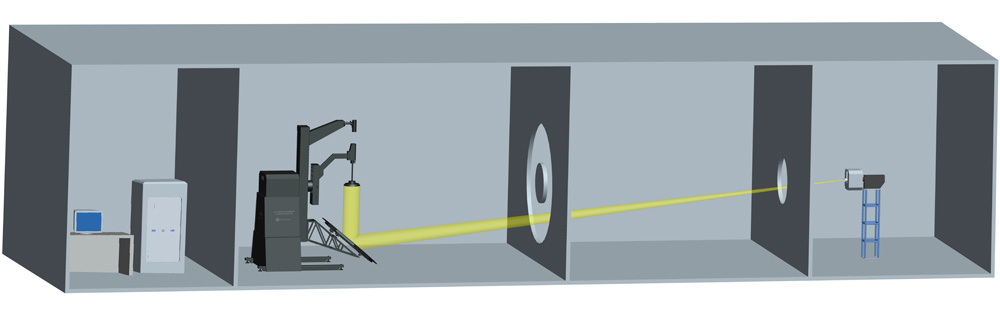
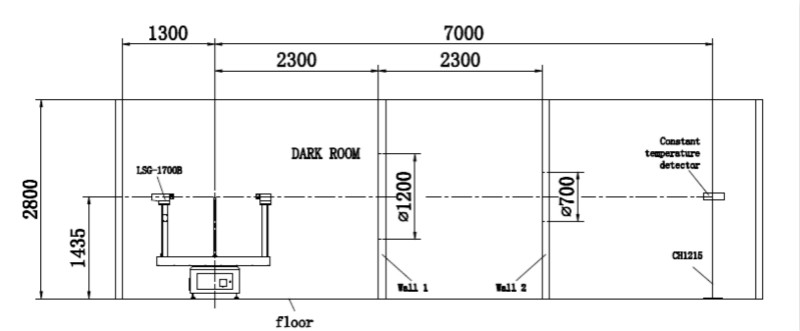
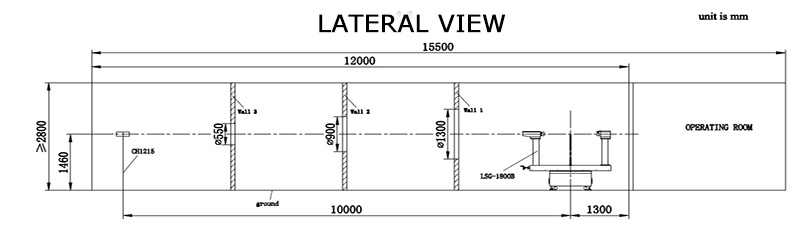
The size requirements for dark room: for example, such as LISUN LSG-5000 LM-79 Type C Mirror Goniophotometer System. According to CIE requirement, dark room consists of 2 parts, the recommended size of the dark room for Goniometric Rotating Console is W5.0m*L5.0m*H5.9m;  the recommended size of the dark room for Photometric Light Path is W1.5m*H1.5m*L(15m – 30m). According to the requirements of CIE, the recommended distance between lamp and photo detector is 6 times than the diameter of lamp. The recommended size of operating room is no less than W3m*L3m. LISUN GROUP engineer dept will submit the Lab Design support documents according to the customer’s real lab size after the formal purchase order was confirmed.

LSG-5000 Moving Detector Goniophotometer Dark Room
Requirements of eliminating the stray light: the photodetector can only receive the light reflected by the rotating mirror in the LSG-5000 system. The light given off directly by the luminaries and reflected by the wall and floor is warded off by the light fence. Internal surface of the dark room and dark path together with the surface of the light fence should be painted unpolished black or be covered by black cloth and black carpet.

Temperature of the Environment: Because of the thermal performance of LED, the photometric value and electronic performance of SSL products are sensitive to the change of temperature and air movement. Temperature around the lamp or luminaries must be 25℃±1℃ during the test. The temperature should be measured in the distance that is no more than 1m, and measurement height should be the same with the SSL product. Temperature sensor should avoid the direct optical radiation of SSL product and other light source. Therefore, you should place an air conditioner in the dark room to control the temperature around the lamp to reach the temperature requirement of CIE. If the measurement is not doing under the recommended temperature, this is a non-standard condition, which should be remarked in the test report.

Requirements of Airflow: Airflow may be induced by natural aeration, air conditioner or movement of the luminaries in the goniophotometer, but the speed of the airflow couldn’t exceed 0.2m/s. The airflow of the tested lamp surface may greatly change the electric value and photometric value. The testing personnel must not enter the dark room during the test.

Vibration and shock: When the lamp is in lighting, the vibration couldn’t exceed 10m/s2(4~3000Hz), or the moving scope of the lamp couldn’t exceed 30mm (at most 4Hz).

Smoke, Dust and Moisture: The test environment must free from smoke, dust or moisture. At the same time, even not during the measurement, smoke, dust or moisture will also influence the reflectance of the reflecting mirror and induce more stray light. So, the test room must be kept clean, no smoke and dry. The humidity should be less than 60% RH.

LISUN has many different types of goniophotometers. Pleae click to view the different darkrooms for different goniophotometers.

Lisun Instruments Limited was found by LISUN GROUP in 2003. LISUN quality system has been strictly certified by ISO9001:2015. As a CIE Membership, LISUN products are designed based on CIE, IEC and other international or national standards. All products passed CE certificate and authenticated by the third party lab.

Our main products are Goniophotometer, Spectroradiometer, Integrating Sphere, LED Test Instruments, CFL Test Instruments, Photometer and Colorimeter, EMC & EMI Testing, Surge Generator, Electrical Safety Testing, Environmental Test Chamber, Waterproof Test , Dustproof Test Chamber, High and Low temperature Humidity Chamber, Plug and Switch Testing, AC and DC Power Supply.

Please feel free to contact us if you need any support.

Tech Dep: Service@Lisungroup.com, Cell/WhatsApp:+8615317907381
Sales Dep: Sales@Lisungroup.com, Cell/WhatsApp:+8618917996096

Darkroom Design for a Goniophotometer

As the most important part of the lighting test, the main function of the goniophotometer is to measure the absolute luminous intensity. At the same time, it can measure other parameters such as lumen and illuminance. Because of the different testing principle, compared with the integrating sphere spectroradiometer system, the device is more suitable for the measurement of the overall luminaire.

Carrying the measurement with goniophotometer, the standard darkroom is needed. If the darkroom does not meet the requirements, it is likely to affect the final test results, which will lead to the deformation of distribution curve and the inaccurate results of lumen. And the final IES file will not meet the requirements, that will affect the final test results.

According to the requirements of the test environment in LM-79 and CIE-70, this paper makes a brief introduction to the selection of darkroom:

Temperature requirements:

According to the requirements of CIE-70 and LM-79, when carrying the measurement with goniophotometer, the ambient temperature should be around 25°. For the light source with obvious influence on the temperature, the temperature tolerance should be ±1°and the other light sources are ±3°. If the test is carried out at different ambient temperatures, the temperature should be stated.

In order to meet the requirements of test environment, it is usually required to install air-conditioner in the darkroom to control the temperature. At the same time, a thermometer with a precision of 0.01°is needed to use to calibrate the temperature.
Stray light requirements:

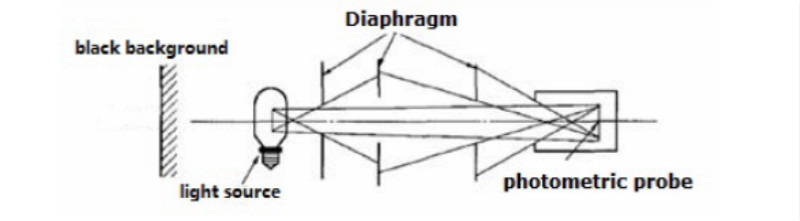
Stray light has a bad effect on the test results, so it is recommended that the diaphragm should be used between the light source and the photometric probe to prevent stray light, but the diaphragm mustn’t block the direct light between the probe and the light source.

It is possible to determine the ratio of stray light by placing a minimum possible size screen in the middle of the light source and the photometric probe. The screen blocks the direct light from the light source to the photometric probe.

The test of light intensity distribution should be repeated when the screen is in the corresponding position. The measurement signal at this time is the signal of direct stray light, which should be subtracted from the test result without this screen.

In general, the biggest influence on the test results is the stray light, which will directly lead to the test result of the light intensity distribution curve is not accurate, then the IES or LDT file will not be used naturally. According to the requirements of the standard, the installation principle of the diaphragm is as follows:

Darkroom Design for a Goniophotometer
According to different models of goniophotometer and different size of customers’ darkroom, Lisun engineers will design the different size diaphragm for customers.
Darkroom Design for a Goniophotometer
LSG-2000 Goniophotometer with Rotating Mirror

Darkroom Design for a Goniophotometer LSG-1700B High Precision Rotation Luminaire Goniophotometer

Requirements for darkroom wall painting:

According to the standard, in the actual test, there is only one light source to be measured in the darkroom. In this case, if the room wall is bright color, or white,or the use of reflective coatings, it will cause stray light to affect the test results. When sending drawings to customers, Lisun usually asks customers to use the matt black coating to paint all the walls. It’s important to note that the most important wall in the darkroom is the wall facing the photometric probe, which is usually the wall behind the goniophotometer host. Stray light will be directly detected in the probe if there is stray light.

Darkroom size requirements:

According to LM-79 and CIE-70 requirements, the length of test optical path should be at least for more than 5 times of the diameter of the longest dimension of the test lamp. It means that if the maximum size of the measured light is 1.2 meters, the length of the optical path should be at least 6 meters and plus the position of host and probe, the whole darkroom length should be at least 8 meters. A standard darkroom can guarantee the test accuracy.

The above four requirements are the basic points that the user must pay attention in the preparation of the darkroom. LISUN will also design the darkroom for all customers, and help customers rectify the darkroom to ensure a standard test environment. At the same time, all of LISUN’s LSG-1700B/1800B/2000/3000/5000 goniophotometer are equipped with a constant temperature probe with high precision. Under this premise, when customers prepare temperature control system for darkroom, they can only consider the temperature control system of lamp position, which can greatly save the cost.

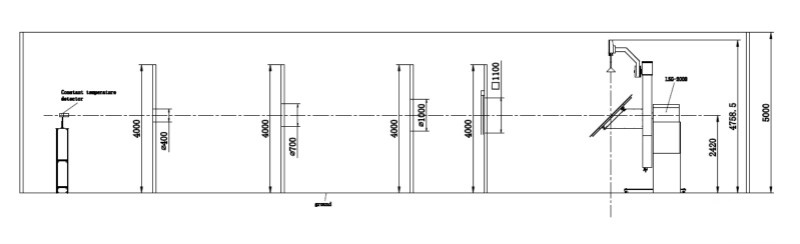
The following is the design of standard darkrooms:

Darkroom Design for a Goniophotometer
Lisun Instruments Limited was found by LISUN GROUP in 2003. LISUN quality system has been strictly certified by ISO9001:2015. As a CIE Membership, LISUN products are designed based on CIE, IEC and other international or national standards. All products passed CE certificate and authenticated by the third party lab.

Our main products are Goniophotometer, Spectroradiometer, Integrating Sphere, LED Test Instruments, CFL Test Instruments, Photometer and Colorimeter, EMC & EMI Testing, Surge Generator, Electrical Safety Testing, Environmental Test Chamber, Waterproof Test , Dustproof Test Chamber, High and Low temperature Humidity Chamber, Plug and Switch Testing, AC and DC Power Supply.


Please feel free to contact us if you need any support.

Tech Dep: Service@Lisungroup.com, Cell/WhatsApp:+8615317907381
Sales Dep: Sales@Lisungroup.com, Cell/WhatsApp:+8618917996096

2020年3月17日星期二

How to measuring LED lamp start, run up time and flicker effectively?

Due to the LED solid-state lighting products have good luminous efficiency, long life and high reliability unique characteristics, so it’s became more popular by markets and customers. But at the same time, the LED solid lighting have fast response characteristics, it haven’t thermal inertia and afterglow effects, like traditional lamps, so it have big influence by current fluctuations, the current fluctuations affect the luminous flux output directly, the lighting flashing is the external expression of luminous flux change, that caused more and more people focus on lighting flashing issue. Dated 14th December, 2012, the EU officially released the (EU) NO 1194/2012 rules <Implementing rules of the European Parliament and the EU Council Directive 2009/125/EC on the eco-design requirements of directional lights, LED lights and related equipment requirements>.Compared with <European Parliament and Council Directive 2005/32/EC implementing rules for non-directional household lamps eco-design requirements> which posted by the European Commission Regulation (EC) NO 244/2009 Regulations dated 18th March, 2009, the new rules have complete mandatory and eco-design requirements. Start and Run-up time as the two indicators functional requirements in the industry has been more emphasis by manufacturers.

We just talked about the LED solid lighting product’s flicker effect, many people have no idea about this. The light source flashing is directly expression of luminous flux fluctuation, the light source is driving by AC current and pulsed DC current, luminous flux, illuminance or brightness change accordingly with the current amplitude of cyclical change. Normally, according to human eyes feeling, the flicker divided into Visiable Flicker and Invisible Flicker. When the frequency more than 100Hz, the human eyes can’t feeling the flicker, but it will cause eyestrain, headache etc, this is the flash effect, generally agreed that the flicker effect exists within 500Hz. For this issue, America Energy Star(ENERGY STAR lamps V1.0 draft 4 In the dimming performance requirements specified in the blink Conditions to be fulfilled, use all tools). As below figure:

How To Measuring LED Lamp Start, Run Up Time And Flicker Effectively

Light source flashing allowed range:

1、Frequency less than 100Hz;
2、Within 120Hz-800Hz frequency range, the F1<0.001 X frequency;
3、Frequency more than 800Hz, F1 have no requirements;
4、Frequency is uncertain, PF<30%;
Besides, the CFL lamp output frequency range should at 20-30KHz, or more than 40KHz.

The nature of light source flicker is luminous flux output fluctuations. When measuring light fluctuates with time change, not only the brightness curve can be tested, but also can test luminous flux curve or illumination curve which are under the same conditions. ENERGY STAR(V1.0)make the rules to measuring flicker’s requirements:

1、Power and instrumentation are need meet the requirements of LM-79-08;
2、Multi-channel oscilloscope with memory function, necessary need to add attenuation probe. The sampling rate is more than 2kHz, the sampling time is more than 100ms;
3、Photo detector V(入) Correction, and need meet the requirements of the corresponding time;
4、For the absolute value of the metering(absolute photometry): Need use integrating sphere when measuring of the absolute value; For relative value metering(relative photometry): To ensure that the detector is capable of measuring the relative light output, and only receives light from the light source to be measured;

Before measuring, the CFL lamps need light on 100 hours at least and it’s need preheat before testing. LED lamp needn’t lighting on, the environmental temperature range should at 25+/-5 degrees.

To meet EU ErP rules and Energy Star requirements, Lisun developed LSRF-2 Lamp Start, Run-up time and Flicker Test System. The hardware of this system included PH3000 Transient Photometer, LSP-500VAC Programmable AC Power Source Meter, IS-MA series Integrating Sphere, DC3005 DC Power Source and SLS series Standard Lamp; the software of this system included LST-3000 Lamp Start and Run-up Time Test and FLK-3000 Lamp Flick Test. PH3000 Transient Photometer is developed base on rapid sampling techniques, it’s fully meet EU and Energy Star relevant requirements. Combined with computer, it can measuring and record the fast change luminous flux waveform and others parameters. PH3000 applied with 12 Bytes, the maximum sampling rate of 10M Hz high-speed A / D. The PH3000 also can used as common illuminometer which can be widely used in light flux, brightness, illumination, etc. photometric detection and measurement. LSP-500VAC Programmable AC Sine Wave Power Source is a high-power, low pure sine wave distortion, high stability, integrated power supply source table, it’s especially suitable for as test power supply of electronic ballasts, energy saving lamps and other small power household appliances. And this system also included IS-1.5MA Integrating Sphere, DC3005 DC Power Source and SLS-50W Standard Light Source.

Lisun Instruments Limited was found by LISUN GROUP in 2003. LISUN quality system has been strictly certified by ISO9001:2015. As a CIE Membership, LISUN products are designed based on CIE, IEC and other international or national standards. All products passed CE certificate and authenticated by the third party lab.

Our main products are Goniophotometer, Spectroradiometer, Integrating Sphere, LED Test Instruments, CFL Test Instruments, Photometer and Colorimeter, EMC & EMI Testing, Surge Generator, Electrical Safety Testing, Environmental Test Chamber, Waterproof Test , Dustproof Test Chamber, High and Low temperature Humidity Chamber, Plug and Switch Testing, AC and DC Power Supply.


Please feel free to contact us if you need any support.

Tech Dep: Service@Lisungroup.com, Cell/WhatsApp:+8615317907381
Sales Dep: Sales@Lisungroup.com, Cell/WhatsApp:+8618917996096

How to Disable Digital Driver Signature Enforcement for 64bit WIN 7 8 10?

If the driver need be installed in 64 bit Windows System, it need have digital signature. While some driver don’t have digital signature and the PC can’t install this kinds of device. If you want to install this device in 64 bit Windows System, You need disable digital signature enforcement.

Our some equipments need disable signature enforcement, such as LMS-6000, LMS-7000 and LMS-9000 series spectroradiometer.

For Win 7 system

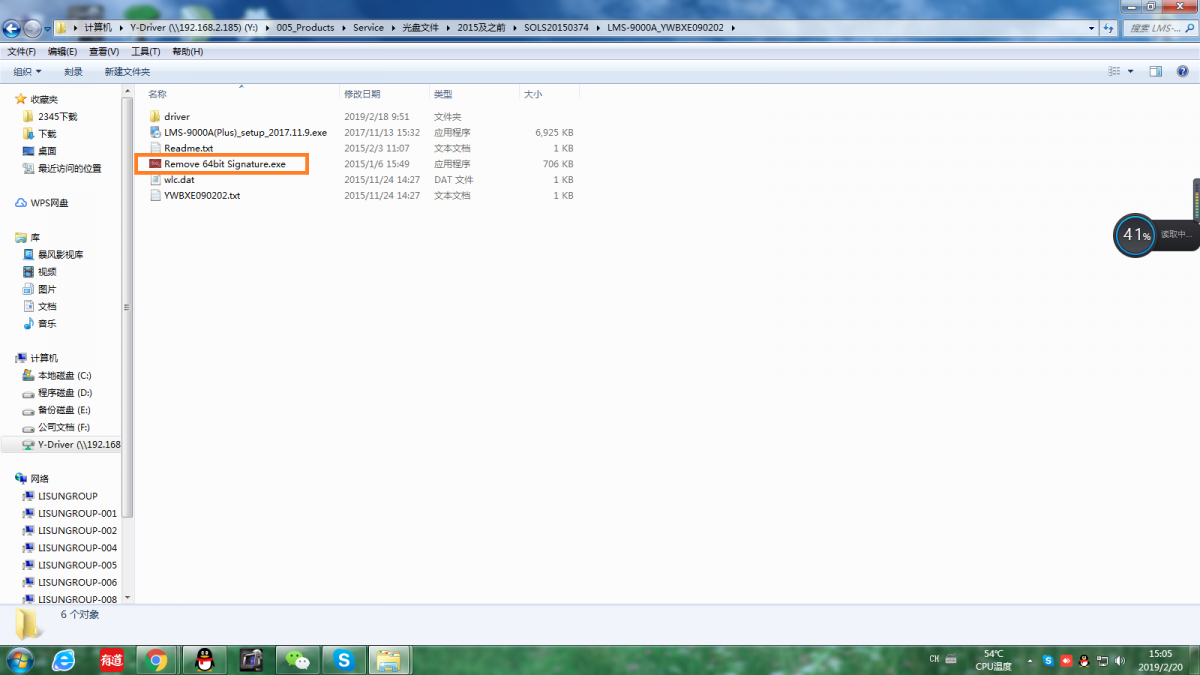
1.For the 64 bit WIN7, We have a small program in the CD, like the picture below. We can disable digital signature by the CD.


2.The program named as below. Double click it.


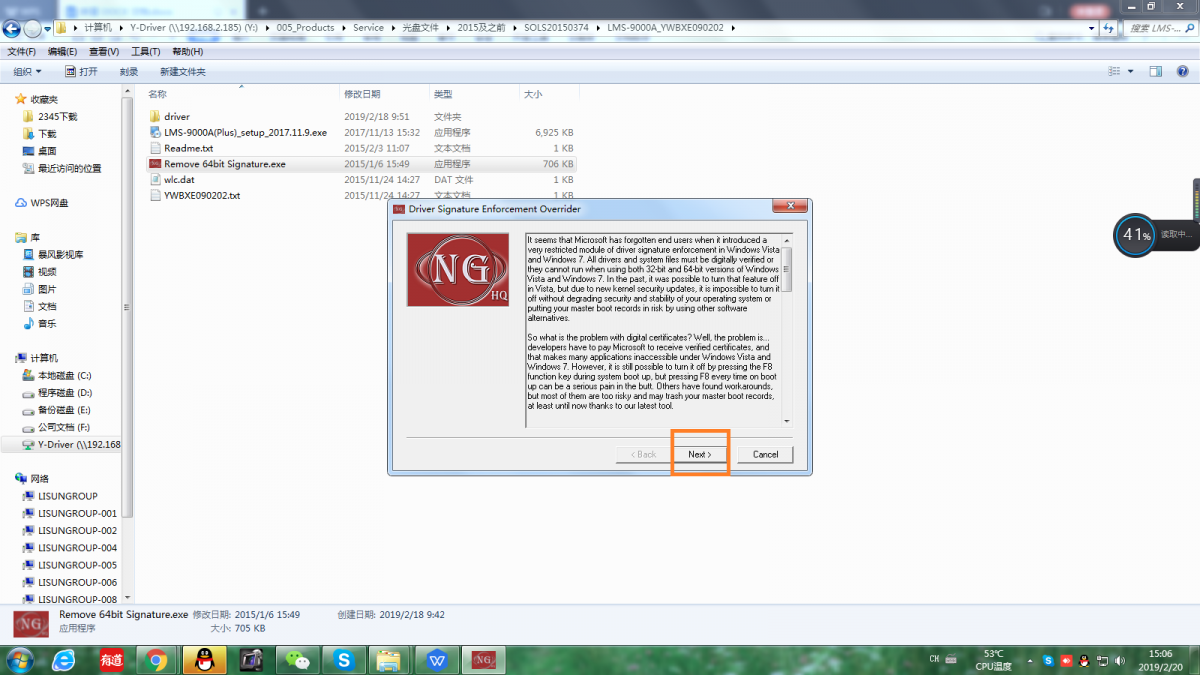
3.Then click ‘Next’


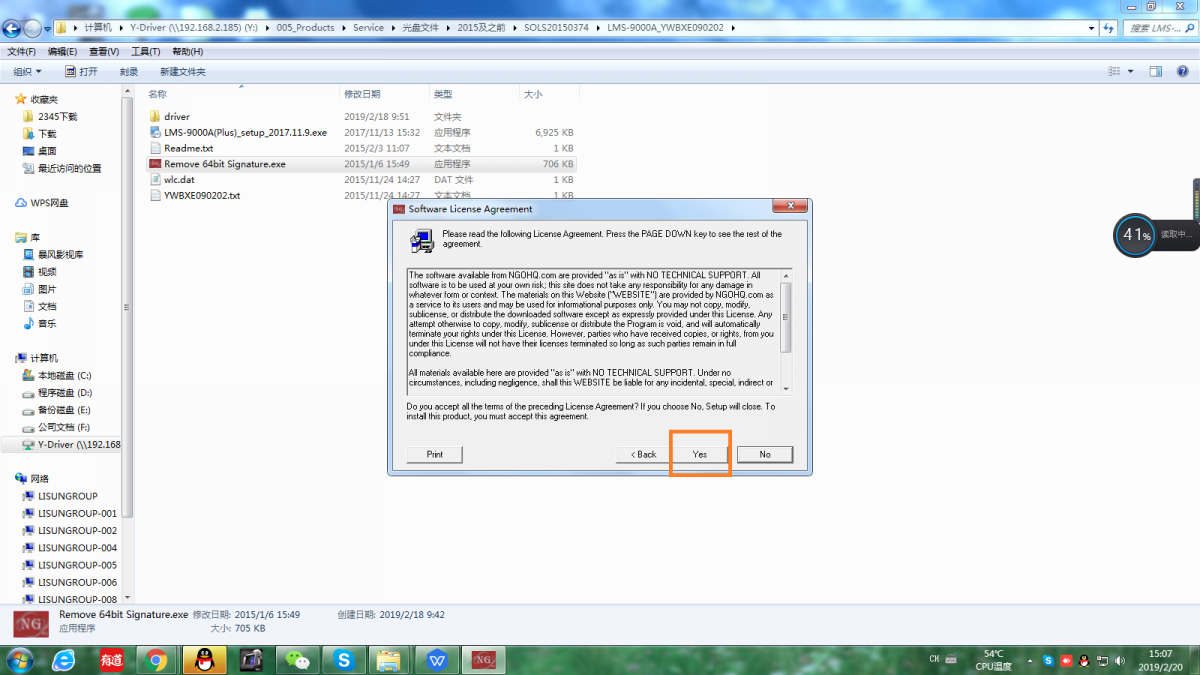
4.Click ‘Yes’


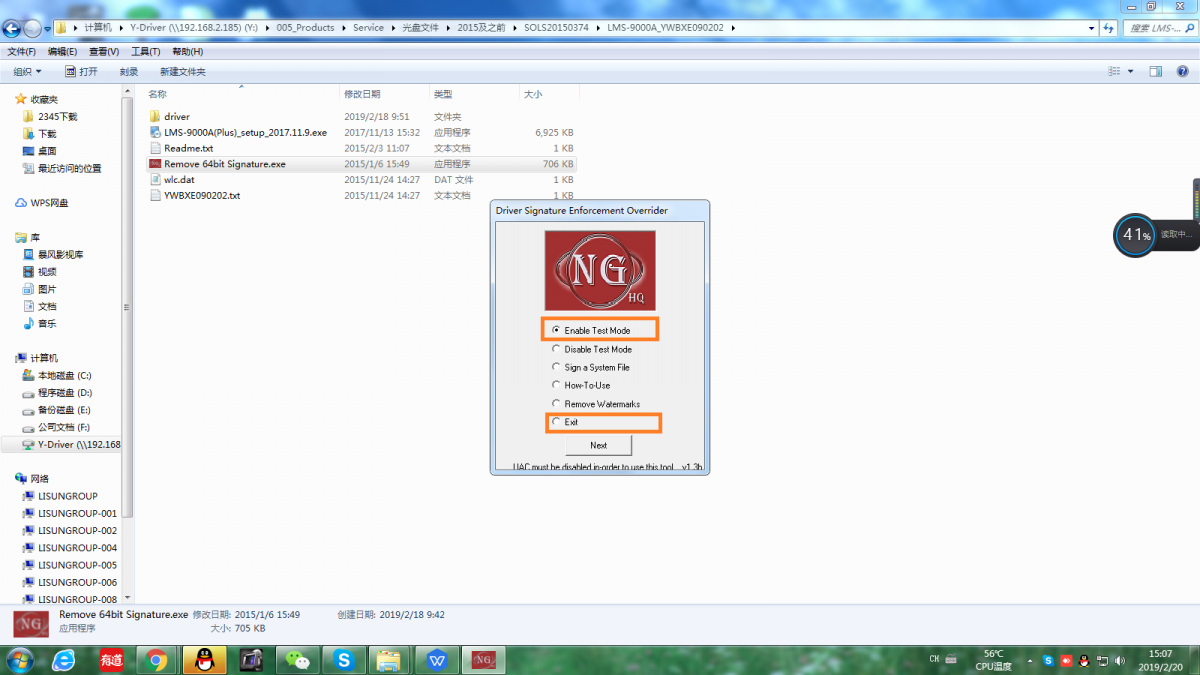
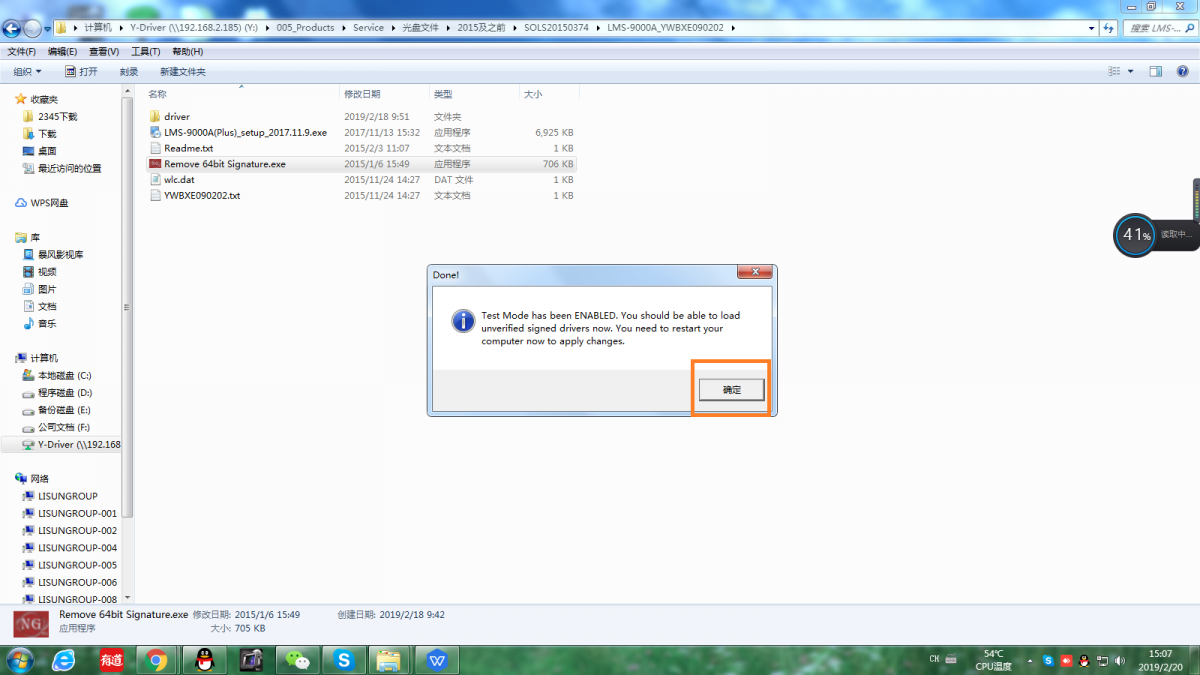
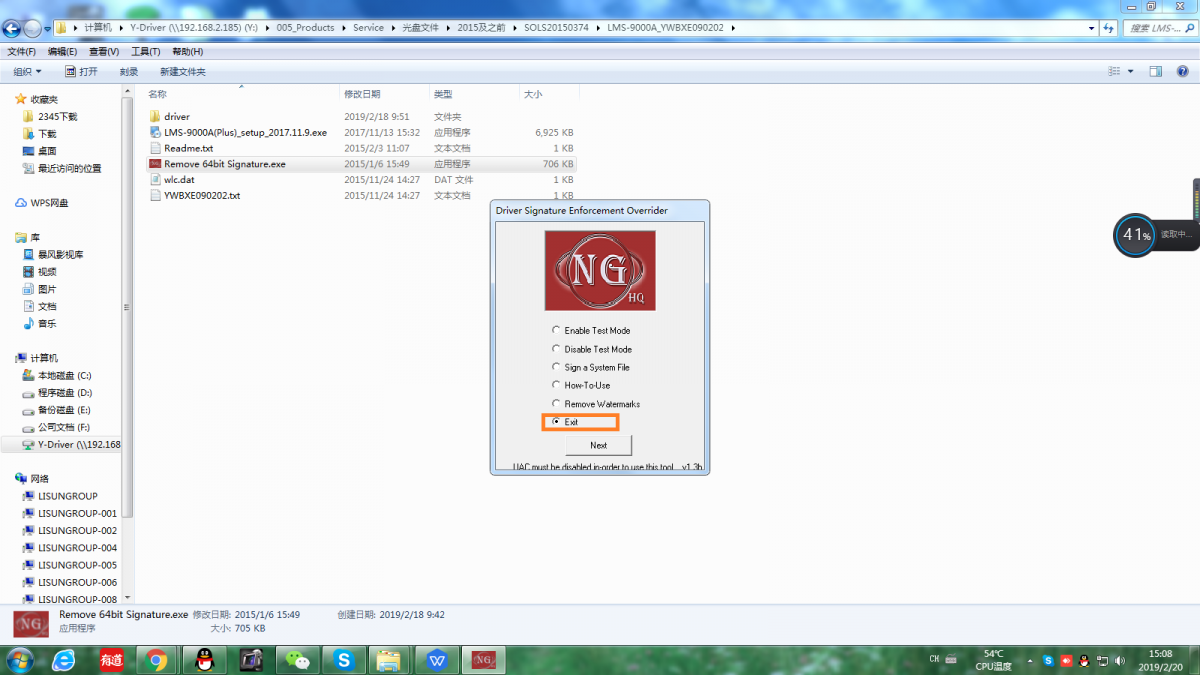
5.Click ‘Enable Test Mode’ and go ‘Next’


6.Click’确定’


7.Click‘Exit’


8.Restart the PC and removed the signature successfully

For Win8 and Win10 System

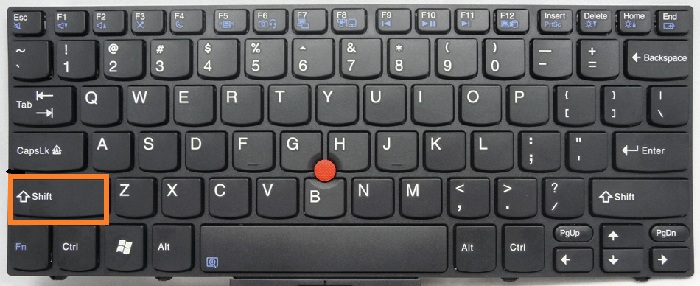
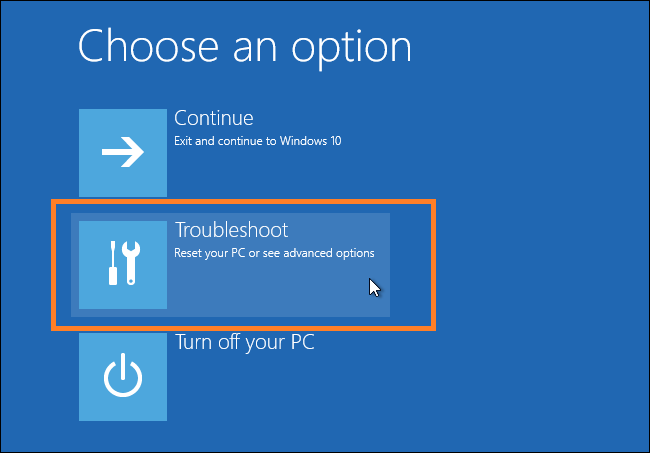
1.For the 64 bit WIN8 & WIN10. We can disable the digital signature on the PC directly. First hold down ‘Shift’ key.


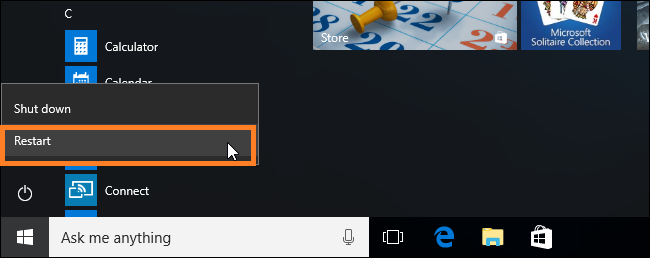
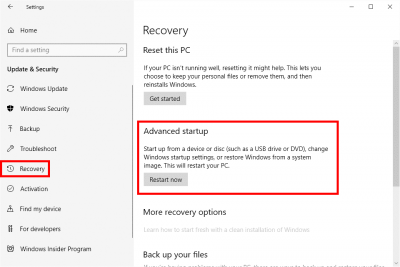
2. Click ‘Restart’ as below picture.


3.Click‘Troubleshoot’

How to Disable Digital Driver Signature Enforcement for 64bit WIN 7 8 10?

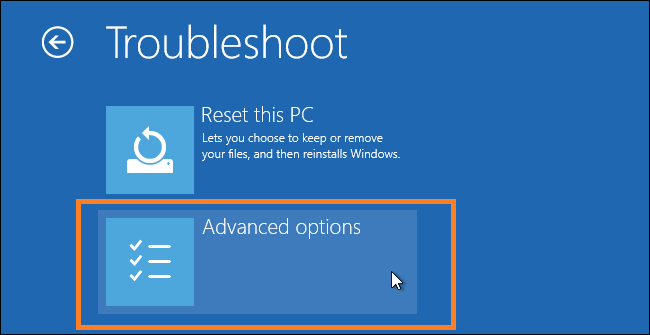
4.Enter ‘Advanced options’

How to Disable Digital Driver Signature Enforcement for 64bit WIN 7 8 10?

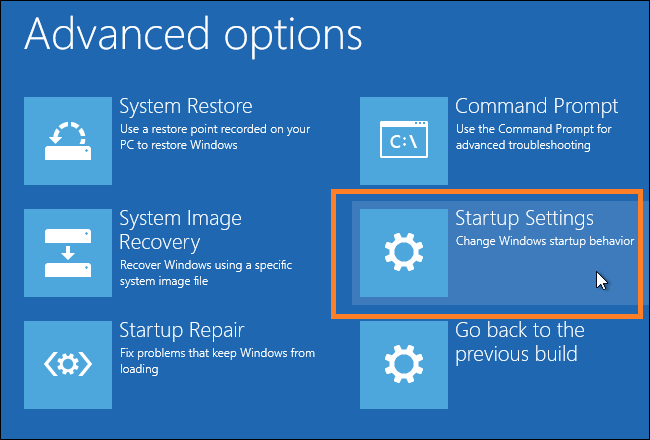
5.Enter ‘Startup Settings’

How to Disable Digital Driver Signature Enforcement for 64bit WIN 7 8 10?

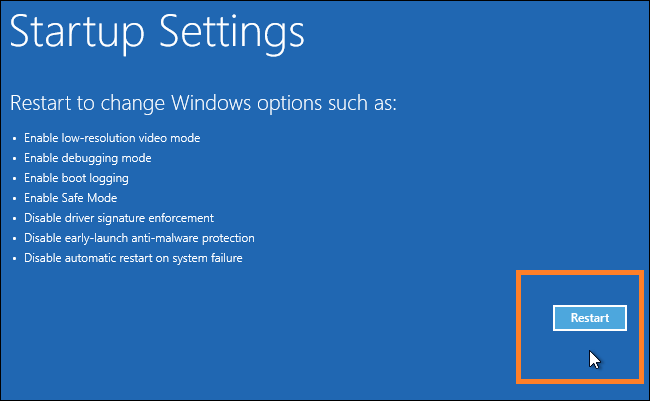
6.Click ‘Restart’

How to Disable Digital Driver Signature Enforcement for 64bit WIN 7 8 10?

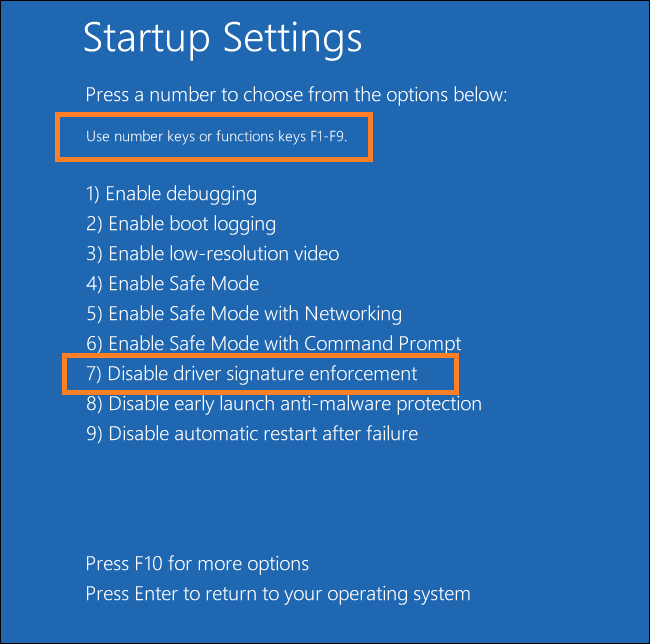
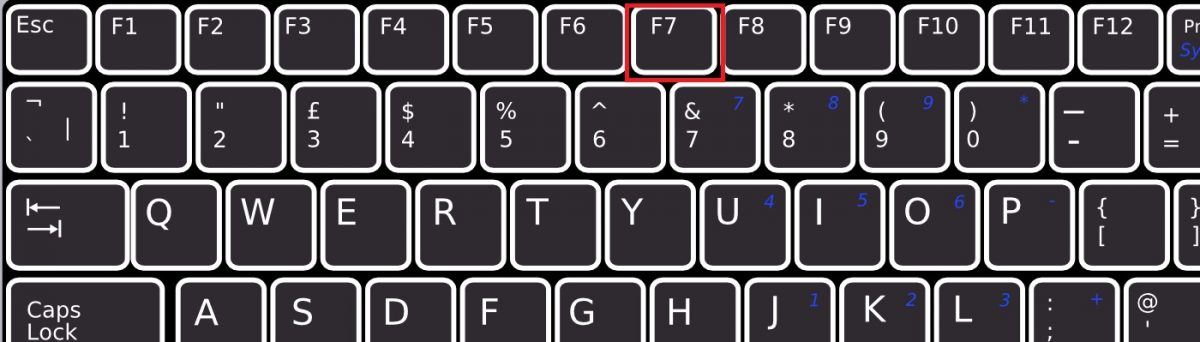
7.Press ‘F7’

How to Disable Digital Driver Signature Enforcement for 64bit WIN 7 8 10?


NOTE: There is another way to enter "Troubleshoot".

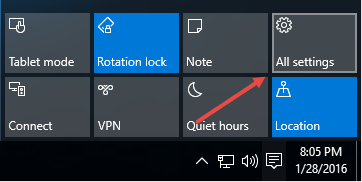
1. Click "All Settings"

Win10 All Settings

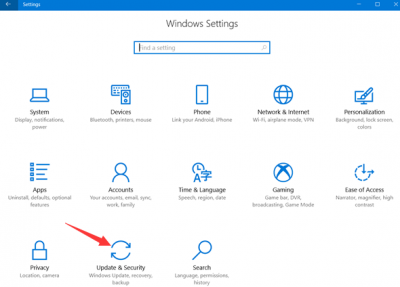
2. Click"Update & Security"


3. Click "Restart now"


You can also watch the complete video as below


Lisun Instruments Limited was found by LISUN GROUP in 2003. LISUN quality system has been strictly certified by ISO9001:2015. As a CIE Membership, LISUN products are designed based on CIE, IEC and other international or national standards. All products passed CE certificate and authenticated by the third party lab.

Our main products are Goniophotometer, Spectroradiometer, Integrating Sphere, LED Test Instruments, CFL Test Instruments, Photometer and Colorimeter, EMC & EMI Testing, Surge Generator, Electrical Safety Testing, Environmental Test Chamber, Waterproof Test , Dustproof Test Chamber, High and Low temperature Humidity Chamber, Plug and Switch Testing, AC and DC Power Supply.


Please feel free to contact us if you need any support.

Tech Dep: Service@Lisungroup.com, Cell/WhatsApp: +8615317907381
Sales Dep: Sales@Lisungroup.com, Cell/WhatsApp: +8618917996096
2020年3月16日星期一

GDJS/GDJW High and Low Temperature Humidity Chamber is Designed According to IEC 60068-2-1 Environmental Testing Part 2-1: Tests-Test A: Cold

The full name of IEC 60068-2-1 is Environmental Testing Part 2-1: Tests-Test A: Cold. It is edited by the IEC technical committee in 2008.We will introduce the IEC 60068-2-1 Environmental Testing Part 2-1: Tests-Test A: Cold

The following is the original content of IEC 60068-2-1

IEC 60068-2-1 Environmental Testing Part 2-1: Tests-Test A: Cold

This part of IEC 60068 deal with cold tests applicalbe to both non heat-dissipating and heat-dissipating specimens. For non heat-dissipating specimens, Tests Ab do not deviate essentially from earlier issues. Test Ae has been added primarily for testing equipment that requires being operational throughout the test, including the conditioning periods.

The object of the cold test is limited to the determination of the ability of components, equioment or other articles to be used, transported or stored at low temperature.

Cold tests cover by this standard do not enable the ability of specimens to withstand or operate during the temperature variations to be assessed. In this case, it would be necessary to use IEC 60068-2-14.

The cold tests are subdivided as follows:

- Cold tests for non heat-dissipating specimens
. with gradual change of temperature, Ab;

- Cold test for heat-dissipating specimens
. with gradual change of temperature, Ad,
. with gradual change of temperature, specimen powered throughout, Ae.

The procedures given is this standard are normally intended for specimens that achieve temperature stability during the performance of the test procedure.

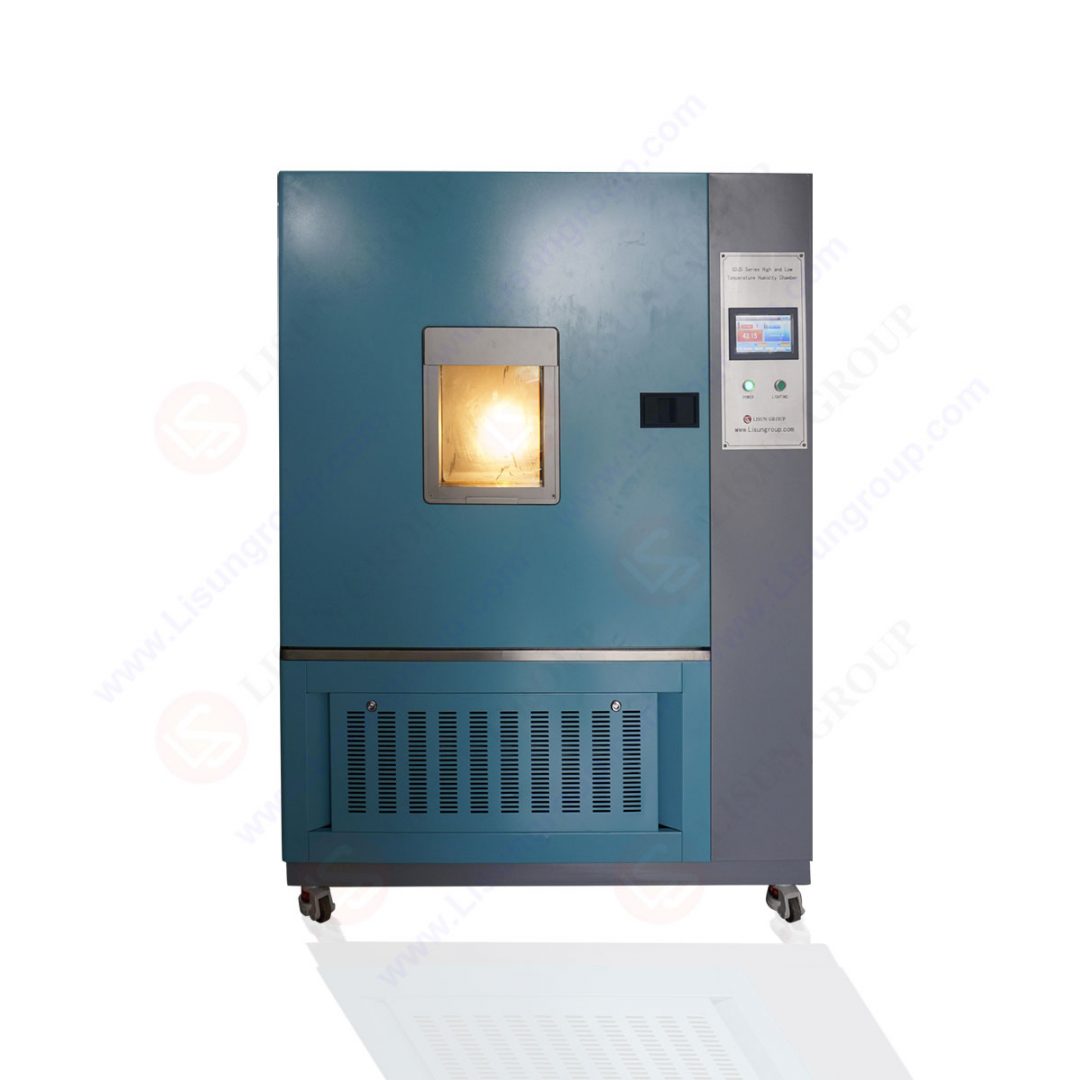
LISUN designed the GDJS/GDJW High and Low Temperature Humidity Chamber according to the IEC 60068-2-1 standard. It is used to test the CFL/LED which meets IES LM-80-08, electricity products, electronic components, material and so on. We will update the procedure and testing parameters according to the updating of the IEC 60068 standard.

The following is the picture GDJS/GDJW High and Low Temperature Humidity Chamber


The following is the video of GDJS/GDJW High and Low Temperature Humidity Chamber


Lisun Instruments Limited was found by LISUN GROUP in 2003. LISUN quality system has been strictly certified by ISO9001:2015. As a CIE Membership, LISUN products are designed based on CIE, IEC and other international or national standards. All products passed CE certificate and authenticated by the third party lab.

Our main products are Goniophotometer, Spectroradiometer, Integrating Sphere, LED Test Instruments, CFL Test Instruments, Photometer and Colorimeter, EMC & EMI Testing, Surge Generator, Electrical Safety Testing, Environmental Test Chamber, IP Waterproof Test Equipment, Dustproof Test Chamber, High and Low temperature Humidity Chamber, Plug and Switch Testing, AC and DC Power Supply.


Please feel free to contact us if you need any support.

Tech Dep: Service@Lisungroup.com, Cell/WhatsApp: +8615317907381
Sales Dep: Sales@Lisungroup.com, Cell/WhatsApp: +8618917996096
Equivalent Test Between Normal & High Frequency Fluorescent Lamp and LED Tube

Comparing with traditional fluorescent lamp, the LED tube have high light effects, low power consume, long life time and stable luminous efficiency advantages etc. At the same time, for the LED tube performance testing is became more simple, in recent years more and more customers has chosen the LED tube to replace fluorescent lamp.

Due to the main lighting products are consist of traditional fluorescent lamp, like the CFL and fluorescent lamp are still occupy a large part of market, it’s impossible to replace all of them immediately, specially at the business centre and market still have many fluorescent lamps and compacted lighting products; if replace all fluorescent lamp to LED tube, it’s need lots of tome and huge cost, the most important is this way can’t be approved. In order to make replacement work more effective, the IEC issued the IEC 62776 standard dated December of 2014, this standard explain how to do equivalent test between normal & high frequency fluorescent lamp and LED tube. Before large scale replace fluorescent lamp to LED tube, we have to make sure the LED tube whether can turn on and meet lighting demand, the lighting demand have two points: the first is require the LED tube have lower power consume than fluorescent lamp; the second is based on consume same power, the LED tube have to higher light effects than fluorescent lamp, so we will discuss the comparison test between fluorescent lamp and LED tube. The below is IEC62776 standard and equivalent test explanation:

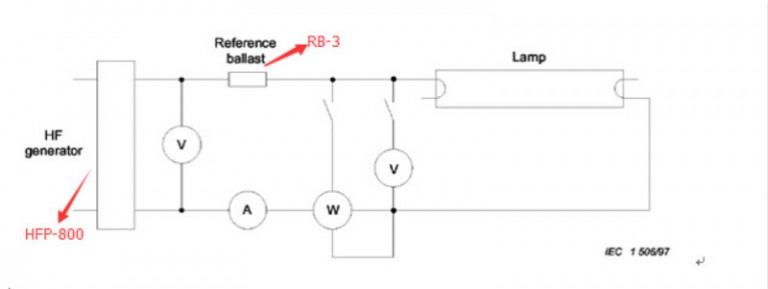
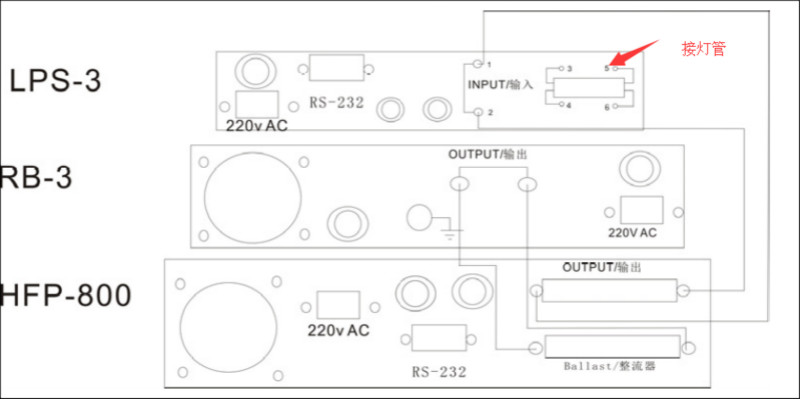
The IEC 62776 standard from chapter 1 to chapter 3.2 are mentioned the LED tube can replace the double-capped fluorescent and how to use G5 and G13 lamp holder fluorescent lamp turn to LED tube, this kind of equivalent replacement needn’t LED tube to do any change, this standard only talk about G5 and G13 lamp holder of LED tube(1 Scope). At the same time, this standard also mentioned the IEC 60081 double-capped fluorescent lamp performance test and LED tube suitable replace fluorescent lamp with integrated magnetic ballasts. How to do equivalent test between LED tube and fluorescent lamp, there will be use a high frequency power supply and high frequency adjustable reference ballast. As we knew the fluorescent lamp is consist of fluorescent capillary, electrical ballast and fixture, the IEC 60081 and IEC 60901 both standards have clear explanation for how to testing fluorescent capillary. The testing process is connect RB-3 adjustable resistance ballast with double-capped of fluorescent capillary, also we need connect HFP-800 high frequency power supply with double-capped of fluorescent capillary, some of fluorescent capillary need to do preheating process according to IEC standard’s requirement, as below picture. At the same time, the relevant parameters need set up according to IEC standard’s requirement.
Equivalent Test Between Normal & High Frequency Fluorescent Lamp and LED Tube

Equivalent Test Between Normal & High Frequency Fluorescent Lamp and LED Tube

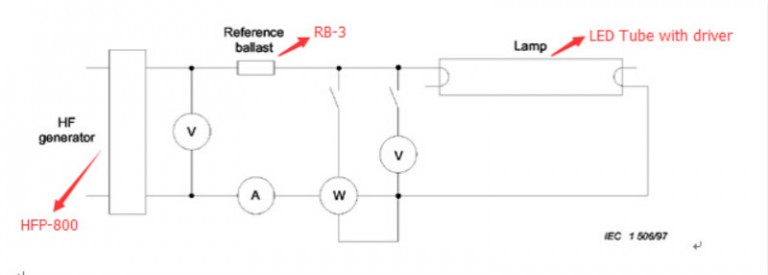
Click to learn more details on How to Measure the High Frequency Fluorescent Lamp. For the equivalent test between fluorescent lamp and LED tube, actually, it’s take away the fluorescent capillary and connect LED tube(included driver) with EB, it’s have necessary to explain the working principle of EB and driver: the EB is AC to AC model, when turn on the fluorescent lamp, there have a AC model high voltage to electric shock fluorescent capillary for lighting lamp, then the EB will output constant AC voltage to maintain the fluorescent lamp is always lighting on; the LED driver is AC to DC model, there have a DC power to lighting on singled LED or LED luminaires. So there use a LED tube(included driver) connect with EB which also keep AC to AC model, the equivalent test have three purposes: One is lighting on LED tube; Second is see whether the power consume of LED tube is lower than fluorescent lamp or not; third is light effect of LED tube is higher than fluorescent lamp(this will be judge by spectrometer & integrating sphere system). If need use best fair way to assess these three purpose, the EB is important, we can’t use any of EB to do this kind of equivalent test, this EB must be mentioned or recommend by IEC or other standards, to solve this issue, Shanghai Lisun Electronic office developed HFP-800 High Frequency Power Supply and RB-3 High Frequency Adjustable Reference Ballast, both device are fully meet IEC60081 IEC60901 and ANSI C78.81 & C82.11standards. As we know the reference ballast is special designed for select reference light(fluorescent capillary), the characteristics of reference ballast have constant voltage and current ratio based on rated frequency, and it couldn’t have any affected by voltage, temperature and ambient changes. The RB-3 is application with no sense of resistance ballast, the HFP-800 provide high frequency reference ballast with pure and high frequency power supply. The HFP-800+RB-3 system not only can to do T5/T8 fluorescent lamp test, but also can to do LED tube equivalent test.

Finally, we can see the difference of fluorescent lamp test and LED tube equivalent test. According to standard’s requirement, for the fluorescent lamp test, there must use relevant device, set up preheat current and preheat time to lighting on fluorescent lamp(As picture 1 show). Due to LED tube is special, when to do connection, we needn’t this device(As picture 2 show):

Equivalent Test Between Normal & High Frequency Fluorescent Lamp and LED Tube

Lisun Instruments Limited was found by LISUN GROUP in 2003. LISUN quality system has been strictly certified by ISO9001:2015. As a CIE Membership, LISUN products are designed based on CIE, IEC and other international or national standards. All products passed CE certificate and authenticated by the third party lab.

Our main products are Goniophotometer, Spectroradiometer, Integrating Sphere, LED Test Instruments, CFL Test Instruments, Photometer and Colorimeter, EMC & EMI Testing, Surge Generator, Electrical Safety Testing, Environmental Test Chamber, Waterproof Test , Dustproof Test Chamber, High and Low temperature Humidity Chamber, Plug and Switch Testing, AC and DC Power Supply.


Please feel free to contact us if you need any support.

Tech Dep: Service@Lisungroup.com, Cell/WhatsApp:+8615317907381
Sales Dep: Sales@Lisungroup.com, Cell/WhatsApp:+8618917996096

2020年3月13日星期五

IEC 60529(GB4208-2008)IP Protection Grade Waterproof and Dustproof test

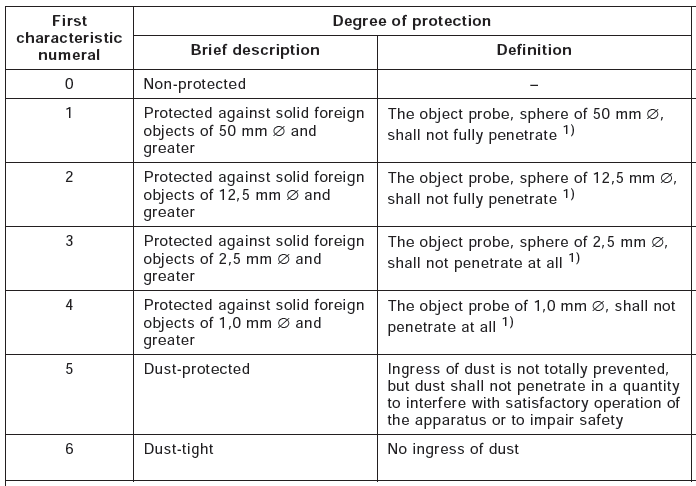
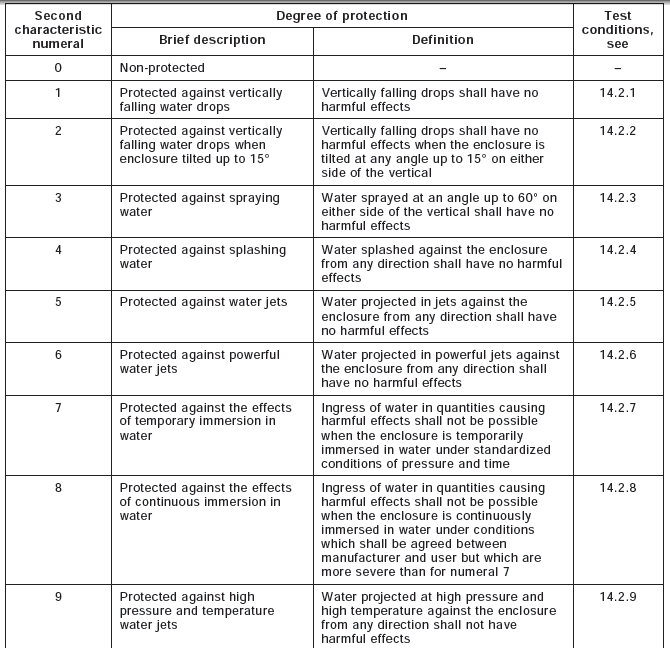
IEC 60529 IP code is a coding system to indicate the degrees of protection provided by an enclosure against access to hazardous parts, ingress of solid foreign objects, ingress of water and to give additional information in connection with such protection IP code includes 4 digits, like IP23CH. IP short for ingress protection; numeral 2 stands for first characteristics and can be instead by numerals 0 to 6 or letter X (not requires to specified), it indicates enclosure against ingress of solid foreign; Numeral 3 standards for second characteristics and can be instead by numerals 0 to 8 or letter X (not requires to specified), it indicates enclosure against ingress of water with harmful effects. Letter C is additional letter, indicates enclosures access to hazardous parts, can be instead by letters A, B, C and D, but this characteristic can be ignored; Letter H is supplementary letter, can be instead by letters H, M, S and W, but this characteristic can be ignored. In this article, we just discuss the first and second characteristics.

IP Code dustproof test

The first characteristic can mark with numerals 0 to 6. We temporally ignore the second characteristic, additional letter and supplementary letter, i.e. IP0X to IP6X. According to IEC60529, it describes as: IP0X——non protected; IP1X——≥50mm diameter; IP2X——≥12.5mm diameter; IP3X——≥2.5mm diameter; IP4X——>1.0mm diameter; IP5X——dust protected; IP6X——dust tight.

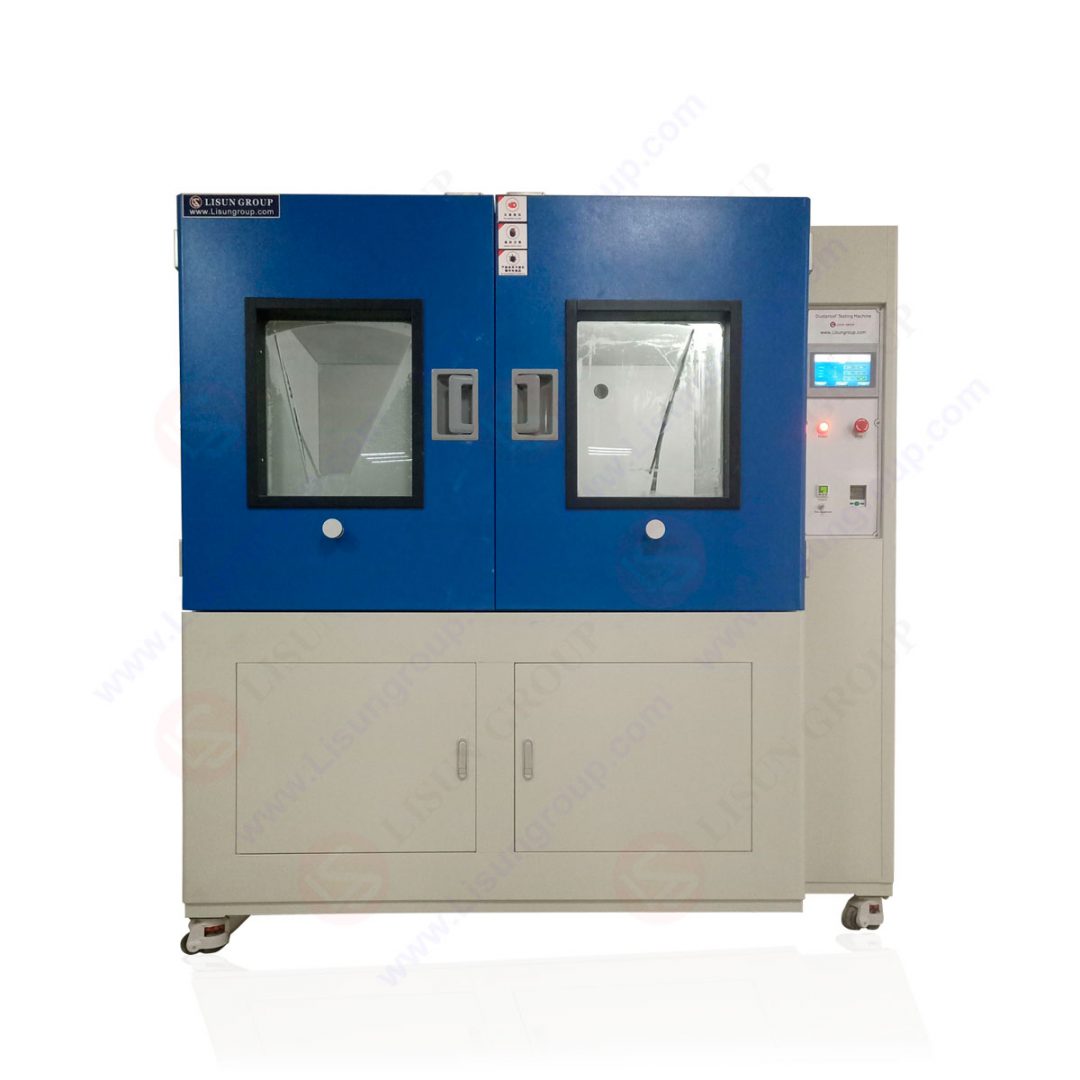
There are many standards refer to IEC60529 regarding dustproof test, like IEC60598 luminaires general requirements and tests, clause 2.3 mentioned to classified the luminaire according to degree of protection against ingress of dust, solid objects and moisture; GB2423.37-89 electric and electronic products basic environmental testing procedure mentioned that sand and dust test method; GB/T4942.2-93 protection grade for low voltage device shell; GB7000.1 and GB7001 luminaire general requirements and test standard mentioned that the luminaire only need to do the test for IP5X and IP6X.

LISUN SC series dustproof testing machine is for IP5X and IP6X test.

SC 015_Dustproof Testing Machine

IP Code waterproof test

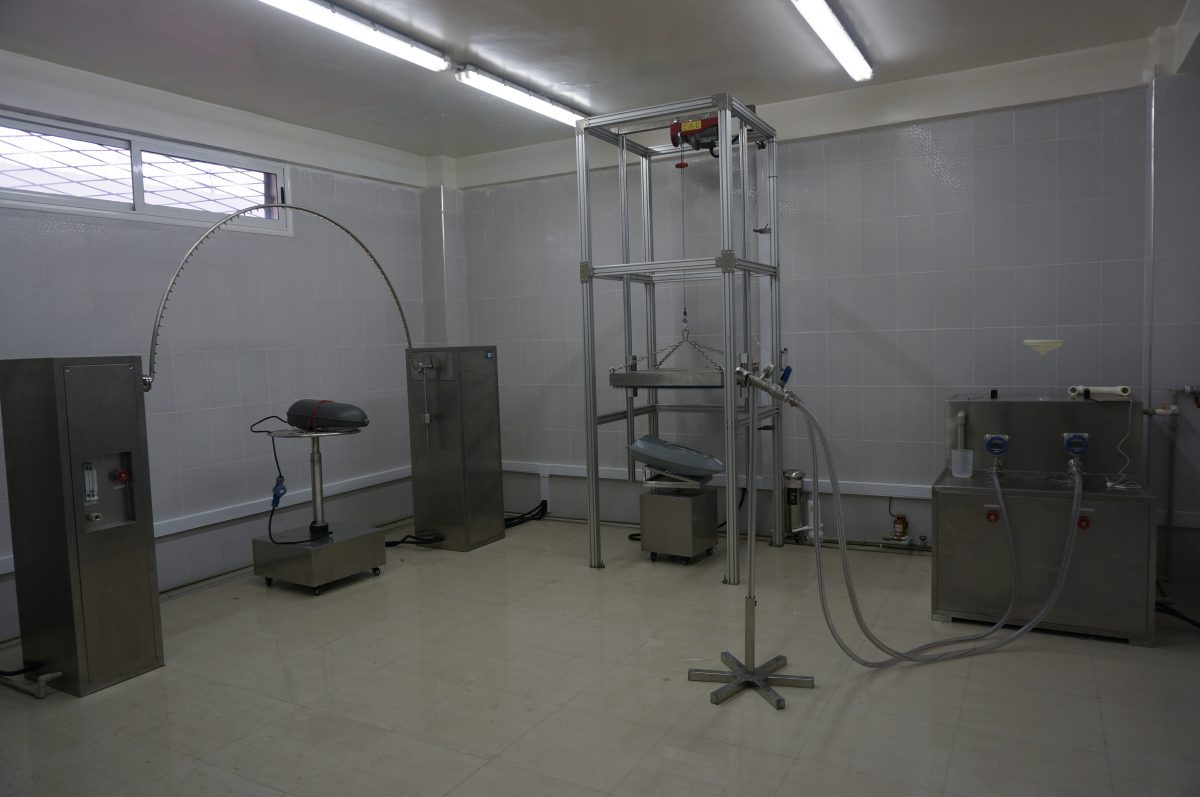
The second characteristic can mark with numeral 0 to 8. We temporally ignore the first characteristic, additional letter and supplementary letter, i.e. IPX1 to IPX8. According to IEC60529, it describes as: IPX0 non protected; IPX1——vertically dripping; IPX2——dripping (15°tilted); IPX3——spraying; IPX4——splashing; IPX5——jetting; IPX6——powerful jetting; IPX7——temporary immersion; IPX8——continuous immersion. The applied water requests clean water. According to the standard, drip box is for IPX1 and IPX2 test; Oscillating tube or spray nozzle is for IPX3 and IPX4 test, the semi-diameter of oscillating tube has 8 solutions for optional according to the size of the sample, the minimum is 200mm, the maximum is 1600mm, and increase step is 200mm. But quantity of the holes is difference for each grade. For example, there are 8 holes in semi-diameter 200mm tube for IPX3, but for IPX4, there are 12 holes in semi-diameter 200mm tube. Water jet hose nozzle is for IPX5 and IPX6 test, but difference grade, the inner diameter of nozzle is different, the inner diameter of nozzle is 6.3mm for IPX5, and 12.5mm is for IPX6, the distance from nozzle to enclosure is 2.5m to 3m. Immersion tank is for IPX7 and IPX8 test, the test time is 30min for IPX7.

LISUN JL-X series is for IPX1 to IPX8 test.

JL 12 FT1_JL X AM_Waterproof Test

There are also many standards refer to IEC60529 regarding dustproof test, like IEC60598 luminaires general requirements and tests mentioned to classify the luminaire according to the degree of protection against ingress of water; IEC60335 house holding and similar electrical appliance general requirements and  IEC60034-5:2000 degrees of protection provided by the integral design of rotating electrical machines mentioned the waterproof test.

In practice, it is a big problem for electronic equipments, luminaire, and house holding manufactures to find the right products to do the waterproof and dustproof test. Lisun Group developed the SC-X series dustproof test chamber and JL-X series waterproof test equipment according to IEC60529. SC-X dustproof test chamber is for IP5X and IP6X test, there are several models for optional according to the sample size.

JL-X is for IPX1 to IPX8 test, there are four equipments for optional, JL-12 drip box is for IPX1 and IPX2 test; JL-34 swing pipe water spray test equipment is or IPX3 and IPX4 test; JL-56 waterproof jet test device is for IPX5 and IPX6 test; JL-78 immersion tank is for IPX7 and IPX8 test.

Lisun Instruments Limited was found by LISUN GROUP in 2003.LISUN quality system has been strictly certified by ISO9001:2015. As a CIE Membership, LISUN products are designed based on CIE, IEC and other international or national standards. All products passed CE certificate and authenticated by the third party lab.

Our main products are Goniophotometer, Spectroradiometer Integrating Sphere System, LED Test Instruments, EMC & EMI Testing, Surge Generator, Electrical Safety Testing, Environmental Test ChamberWaterproof Test ,Dustproof Test , High and Low temperature Humidity Chamber, Plug and Switch Testing,etc.


Please feel free to contact us if you need any support.

Tech Dep: Service@Lisungroup.com, Cell/WhatsApp:+8615317907381
Sales Dep: Sales@Lisungroup.com, Cell/WhatsApp:+8618917996096